
Interview to coordinators of SIG45
Uncertainty Quantification and Data Assimilation in Fluid Dynamics:
Marcello Meldi
Arts et Métiers ParisTech (ENSAM) - Laboratoire de Mécanique des Fluides de Lille (LMFL)
Lorenzo Tamellini
Centro Nazionale della Ricerca (CNR)
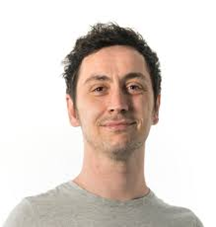
Marcello Meldi

Lorenzo Tamellini
1. What are the objectives of your SIG?
Advances in fluid mechanics in the framework of Industry 4.0 aim at the development of predictive models to obtain fast and accurate predictions of complex flows. However, several scientific barriers must be overcome in order to achieve these ambitious objectives. Among these difficulties, accounting for uncertainties naturally affecting realistic systems is essential, because of their importance in the instantaneous organization of the flow and in the emergence of extreme events. These rare events are usually responsible for important local flow effects and their correct prediction is fundamental.
The objectives of the SIG45 target advancement of fundamental and applied techniques dealing with the estimation of uncertainties and their control. On the one hand, Uncertainty Quantification (UQ) techniques can be used to assess their impact on the flow features. On the other hand, Data Assimilation (DA) techniques can exploit the uncertainty affecting several sources of information in order to obtain advanced state estimation. This state can be used to optimize and train underlying models for fast prediction and control.
The activities of the SIG will focus on three main topics of recent interest in the community:
- Usage of sparse information for the observed phenomena at play, which may set the stage for small data problems.
- Development and application of multifidelity and multilevel techniques in UQ and DA algorithms
- Methods for dynamical systems and strongly time-dependent problems (e.g. highly unsteady flows and extreme events)
2. How do you plan to collaborate among the participants your SIG?
We have organized already five seminars between 2025 and the beginning of 2026 and a mini-symposium at ETMM15 in Dubrovnik. We will hold the first workshop in Trieste, Italy, on November 11-13, which will integrate a number of very short presentations, to allow participants to briefly present their research area and interests. In addition, we plan to organize videoconference meetings around 3-4 times/year. These meetings may include seminars, discussion about scientific subjects and practical information.
3. What opportunities do you see for collaborations with other SIGs (and which ones in particular)?
Due to the relevance of UQ and DA in estimating and controlling uncertainty, these techniques are strongly complementary to machine learning tools relying on uncertainty, such as Bayesian Networks. Moreover, several machine learning techniques can be helpful in UQ/DA tasks (e.g. Feedforward Networks can be employed as surrogate modeling techniques for quantities of interest; Principal Component Analysis can be used to reduce the complexity of random fields, etc) . Therefore, we expect to see strong interactions with SIG54.
4. What activities would you like to conduct in the coming years?
The activities that we envision in the medium term include a number of different actions. First, we plan to prepare a mailing list where we will include interested researchers that we will contact directly via email or personally during scientific events. This reach will be improved with frequent updates and new information on the webpage of the SIG, where we would also like to include some UQ-DA game / fun activity if possible.
The organization of workshops with a certain frequency (probably every 1-2 years, depending on the success of the events) will allow the community to show their work to an audience of experts. We do not exclude the idea to organize such events with other organizations, similarly to what happened with FrontUQ19 in Pisa, which was jointly organized with the Activity Group on UQ of GAMM (German Association of Applied Mathematics and Mechanics).
We will promote when possible the preparation of special issues, in particular related with international journals associated with ERCOFTAC, to provide more visibility to the community. At last, we will promote data and code availability using online open platforms.
 Pilot
Pilot Special Interest
 Knowledge
 ERCOFTAC